
NEWS
CESCAB: ocean glider for passive acoustic monitoring in Cabrera Archipelago National Park
08/2024
Large marine protected areas are increasingly being implemented across the world’s oceans to conserve marine ecosystems. However, their size and often remote locations make them challenging to monitor effectively using traditional methods such as visual surveys. This is particularly relevant for cetaceans, which range over large areas and spend most of their time underwater.
In the western Mediterranean, cetaceans face intense human pressures, including shipping traffic and associated underwater noise. As cetaceans rely heavily on sound, this noise can interfere with vital functions such as communication, navigation and foraging. Collecting information on both cetacean presence and underwater noise is therefore essential for effective conservation.
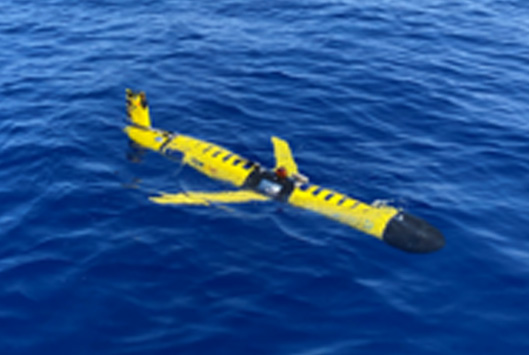
Autonomous underwater vehicles such as ocean gliders are uniquely suited to monitor vast and remote ocean areas. Equipped with passive acoustic monitoring (PAM) systems, gliders can continuously record the underwater soundscape as they quietly move through the water column, providing information on both cetacean presence and underwater noise across different locations and depths, at night and in poor weather conditions.
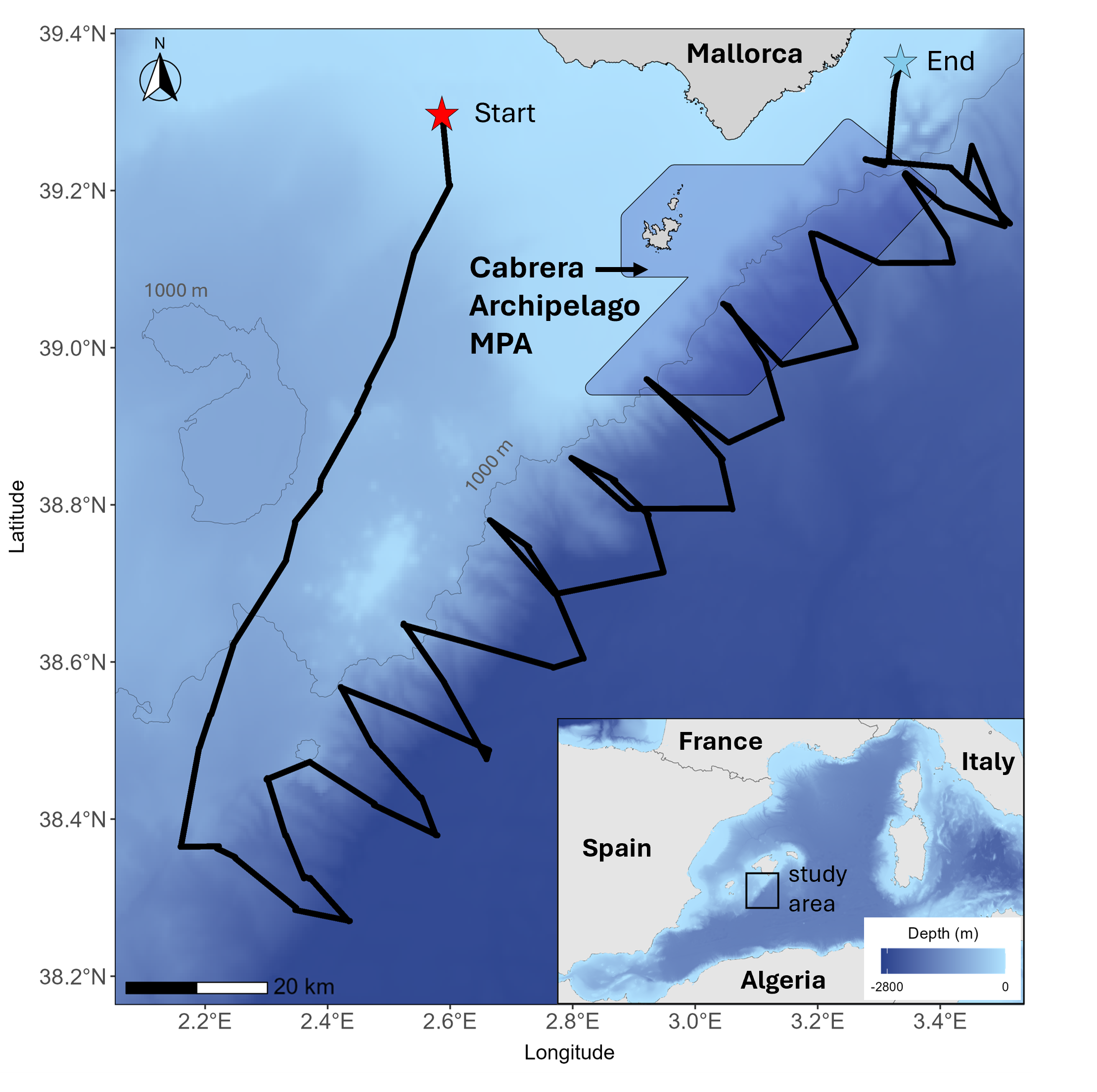
From 1 August to 2 September 2024, the CESCAB campaign deployed a PAM-equipped ocean glider in and around Cabrera Archipelago National Park in the Western Mediterranean Sea. The glider surveyed offshore waters to depths of almost 1,000 metres, collecting acoustic and oceanographic data throughout the mission.
Cetacean vocalisations were detected across the study area, identifying the presence of sperm whales and dolphins. Clear differences in acoustic activity were observed between day and night, with sperm whale echolocation activity being higher during daytime and dolphin during nighttime. Underwater noise levels remained relatively stable throughout the study area, and low shipping activity was observed during the campaign. Oceanographic observations allowed to understand the dynamic environmental conditions encountered by the glider.
Together, these results highlight the potential of ocean gliders for integrated monitoring of large and remote ocean areas, supporting their integration into broader ocean observing systems. The CESCAB campaign contributes to the goals of the IOS4DOM project by demonstrating how these technologies can provide complementary information on marine megafauna and human pressures to support marine conservation and management.
Posted by:

Greta Jankauskaite
PhD Student