
PROJECTS
IOS4DOM
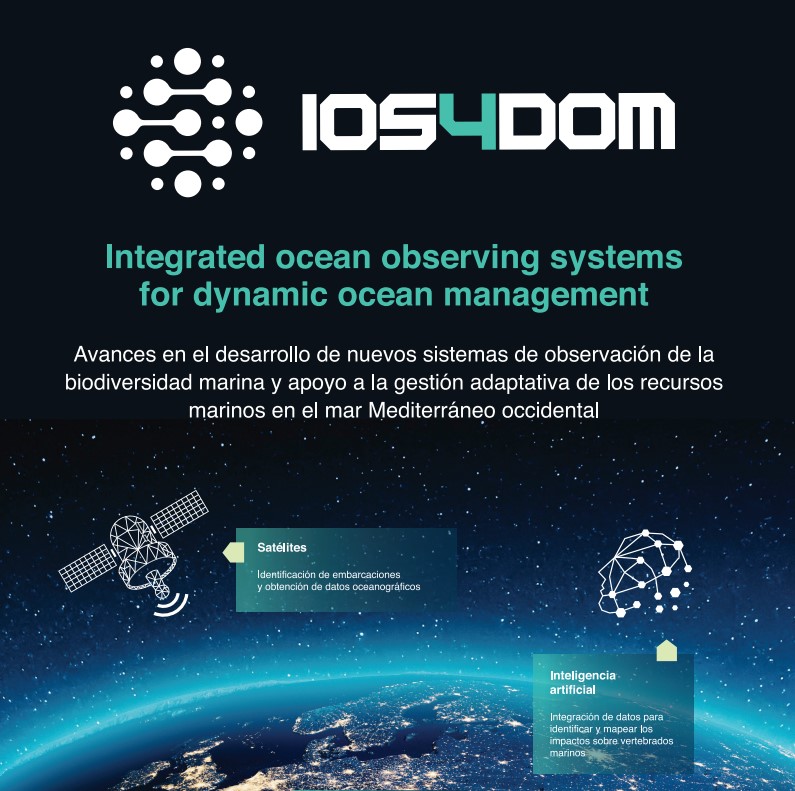
Integrated ocean observing systems for dynamic ocean management
Reference number: CIDEGENT/2021/058
Duration: June 2022 – November 2026
Keywords: marine megafauna, conservation, robotics, machine learning, molecular biology, operational oceanography.
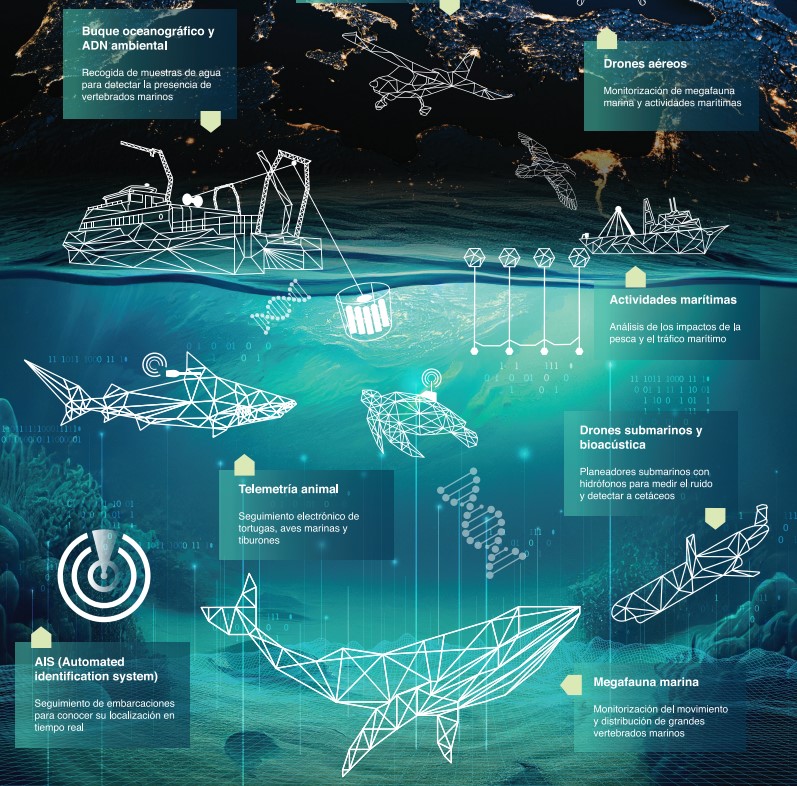
This research proposal aims to swiftly advance the development of new marine biodiversity observing systems and move towards new frontiers in operational ecology to support the adaptive management of marine resources. We will direct the research through a multidisciplinary approach, combining recent advances in quantitative methods (e.g. machine learning, movement analysis) with new molecular (DNA metabarcoding), and technological developments (underwater drones, earth observations, bio-logging), which offer unprecedented opportunities to simultaneously monitor marine animal movement and biodiversity, ship-based activities and the marine environment. We will led an innovative multi-platform experiment using a unique combination of ocean gliders, aerial surveys, ocean research vessel surveys and the Automated Identification System (AIS) vessel tracking to simultaneously monitor changes in ocean life, ocean characteristics, and human activities. Results will allow the linking of key enabling ocean observation technologies to their application in assessing the potential impacts from anthropogenic activities and promoting the sustainable development of maritime industries. The combined skill-set of the research team will allow to address fundamental, timely and important questions about human mobility, animal ecology and conservation. Overall, this project will provide an innovative and cost-effective approach for non-invasive monitoring of marine ecosystems using autonomous underwater vehicles, which will contribute to the sustainable development of the blue economy and marine management.
Team Members

David March
Distinguished Researcher

Irati Abascal
Research Technician

Javier Menéndez
PhD Student

Leia Navarro
PhD Student
Eva Horcajo
Research Technician
Chloé Fernandez
PhD Student
Partners




Funding


DATA SETS
SOFTWARE
Related publications
2026
Ruiz-García, David; Barría, Claudio; Raga, Juan A.; March, David
Key drivers of at-vessel mortality in demersal sharks Journal Article
In: Conservation Biology, vol. 40, no. 1, pp. e70100, 2026.
@article{https://doi.org/10.1111/cobi.70100,

title = {Key drivers of at-vessel mortality in demersal sharks},

author = {David Ruiz-García and Claudio Barría and Juan A. Raga and David March},

url = {https://conbio.onlinelibrary.wiley.com/doi/abs/10.1111/cobi.70100},

doi = {https://doi.org/10.1111/cobi.70100},

year  = {2026},

date = {2026-01-01},

urldate = {2026-01-01},

journal = {Conservation Biology},

volume = {40},

number = {1},

pages = {e70100},

abstract = {Abstract Chondrichthyans are highly vulnerable to fisheries overexploitation, and postcapture mortality poses a significant threat to most species. Global bycatch mitigation guidelines recommend adopting hierarchical decision-making approaches tailored to species-specific vulnerabilities and socioeconomic and regulatory contexts. Effective implementation of such strategies requires robust understanding of the factors driving vulnerability to postcapture mortality. To address this need, we developed a machine learning method to identify key drivers of at-vessel mortality (AVM) based on a broad set of biological, environmental, and fishing-related parameters. We sought to reveal interactions among predictors, nonlinear responses between these variables and mortality risk, and threshold values beyond which the likelihood of mortality increased markedly. We applied this approach to trawl bycatch data on small-spotted catshark (Scyliorhinus canicula) and blackmouth catshark (Galeus melastomus) in the western Mediterranean. Body size, air temperature, and on-deck time emerged as the primary AVM drivers. Mortality risk increased substantially at temperatures above 20°C for S. canicula and 16°C for G. melastomus, with on-deck exposure exceeding 15 min, and when body size was below 40 and 55 cm, respectively. Identification of these drivers and thresholds provides valuable insights for bycatch mitigation; can inform strategies for more threatened, closely related, or physiologically and ecologically similar species; and may support management authorities in adopting targeted bycatch avoidance strategies, gear selectivity, and mortality reduction measures. Such measures can be tailored to specimens, areas, and periods of heightened mortality risk to maximize effectiveness. Furthermore, our scalable modeling approach offers a robust tool for identifying critical AVM drivers across regions and species, and its applicability can be extended to broader fisheries management and global conservation efforts.},

keywords = {},

pubstate = {published},

tppubtype = {article}

}
Orejas, Covadonga; Vinha, Beatriz; Ainsworth, Gillian B.; Saldanha, Sarah; Militão, Teresa; Mohn, Christian; Hansteen, Thor H.; Ratão, Sara S.; Hoving, Henk-Jan; Amaro, Teresa; Anderson, Dominique M. J.; Araújo, Deusa; Correia, Ana Mafalda; Berrow, Simon; Dinis, Herculano A.; Freitas, Rui; Lopes, Evandro; Lopes, Vanessa; Lopez, Pedro; Macedo, Thais; March, David; Martins, Samir; Matos, Diana M.; Medrano, Fernando; Melo, Tommy; Monteiro, Gilda; Giménez, Ángela Mosquera; Paiva, Vitor H.; Queiroz, Nuno; Schütte, Florian; Stauffer, Julian B.; Taxonera, Albert; Weelden, Celine Van; González-Solís, Jacob; Huvenne, Veerle A. I.
Seamounts of Cabo Verde: A review of their ecological and economic significance, anthropogenic impacts, and conservation needs Journal Article
In: Progress in Oceanography, vol. 240, pp. 103579, 2026, ISSN: 0079-6611.
@article{OREJAS2026103579,

title = {Seamounts of Cabo Verde: A review of their ecological and economic significance, anthropogenic impacts, and conservation needs},

author = {Covadonga Orejas and Beatriz Vinha and Gillian B. Ainsworth and Sarah Saldanha and Teresa Militão and Christian Mohn and Thor H. Hansteen and Sara S. Ratão and Henk-Jan Hoving and Teresa Amaro and Dominique M. J. Anderson and Deusa Araújo and Ana Mafalda Correia and Simon Berrow and Herculano A. Dinis and Rui Freitas and Evandro Lopes and Vanessa Lopes and Pedro Lopez and Thais Macedo and David March and Samir Martins and Diana M. Matos and Fernando Medrano and Tommy Melo and Gilda Monteiro and Ángela Mosquera Giménez and Vitor H. Paiva and Nuno Queiroz and Florian Schütte and Julian B. Stauffer and Albert Taxonera and Celine Van Weelden and Jacob González-Solís and Veerle A. I. Huvenne},

url = {https://www.sciencedirect.com/science/article/pii/S0079661125001673},

doi = {https://doi.org/10.1016/j.pocean.2025.103579},

issn = {0079-6611},

year  = {2026},

date = {2026-01-01},

urldate = {2026-01-01},

journal = {Progress in Oceanography},

volume = {240},

pages = {103579},

abstract = {The deep-sea areas of the Cabo Verde Archipelago remain largely unexplored, with seamounts standing out as the most prominent and abundant geomorphological features. The ecological significance of these underwater structures is well-documented in various regions of the planet, as they often serve as biodiversity hotspots, stepping stones for species connectivity and, in some cases, areas with high levels of endemism. However, the biology and ecology of the seamounts around Cabo Verde are still largely unknown. Preliminary studies of the geomorphology, oceanographic characteristics and ecology of specific features suggest that the Cabo Verde seamount network — comprising 14 known conspicuous seamounts as well as smaller elevations less than 1000 m — harbours high biological diversity. That biodiversity associated with the Cabo Verde seamounts spans a wide range of forms, from microscopic organisms to cetaceans, encompassing both pelagic and benthic communities. Commercial activities associated with seamounts, in particular fishing, are a critical aspect to consider for ecosystem management. Evaluating their current uses, future prospects, and the existing and potential threats the Cabo Verde seamounts face is essential for effective and sustainable marine spatial planning. This study reviews and synthesises the current knowledge on the Cabo Verde seamounts within its Exclusive Economic Zone (EEZ), focusing on their environmental and biological aspects, including geology, oceanography, and associated biological communities. Key topics include primary production, zooplankton communities, benthic organisms, large vertebrates such as elasmobranchs, sea turtles, seabirds, and cetaceans, as well as microbes and trophic linkages. Additionally, this review explores the socio-economic dimensions linked to seamounts, highlighting their importance to the local economy and emphasizing the need for effective marine spatial management plans. These considerations are crucial for balancing conservation efforts with sustainable use, ensuring the long-term health of these vital underwater ecosystems.},

keywords = {},

pubstate = {published},

tppubtype = {article}

}
2025
Harvey-Carroll, Jessica; Carroll, Daire; Crespo-Picazo, Jose Luis; García-Párraga, Daniel; March, David
Using accelerometers for tracking loggerhead and green sea turtle behaviour Journal Article
In: Animal Biotelemetry, vol. 13, no. 1, pp. 20, 2025, ISSN: 2050-3385.
@article{Harvey-Carroll2025,

title = {Using accelerometers for tracking loggerhead and green sea turtle behaviour},

author = {Jessica Harvey-Carroll and Daire Carroll and Jose Luis Crespo-Picazo and Daniel García-Párraga and David March},

url = {https://doi.org/10.1186/s40317-025-00415-3},

doi = {10.1186/s40317-025-00415-3},

issn = {2050-3385},

year  = {2025},

date = {2025-06-18},

urldate = {2025-06-18},

journal = {Animal Biotelemetry},

volume = {13},

number = {1},

pages = {20},

abstract = {Understanding animal behaviour is critical for the design of effective conservation and management strategies. Animal-borne tri-axial accelerometers constitute a type of biologging device which have the potential to provide continuous high-resolution behavioural data. For marine animals, device attachment position may influence both the accuracy of behavioural predictions and the hydrodynamic profile of the animal. We present a case study on the use of accelerometers for the behavioural classification of two sea turtle species in captivity: the loggerhead (Caretta caretta) and green (Chelonia mydas) turtle. Accelerometers were placed on the first and third scute to represent extreme placement scenarios. We trained Random Forest (RF) models to classify behaviour and assessed the impact of placement and sampling frequency on accuracy. In addition, we assessed the impact of device position on carapace drag coefficient using Computational Fluid Dynamics (CFD).},

keywords = {},

pubstate = {published},

tppubtype = {article}

}
Harvey-Carroll, Jessica; Menéndez-Blázquez, Javier; Crespo-Picazo, Jose Luis; Sagarminaga, Ricardo; March, David
Unlocking sea turtle diving behaviour from low-temporal resolution time-depth recorders Journal Article
In: Scientific Reports, vol. 15, no. 1, pp. 19934, 2025, ISSN: 2045-2322.
@article{Harvey-Carroll2025b,

title = {Unlocking sea turtle diving behaviour from low-temporal resolution time-depth recorders},

author = {Jessica Harvey-Carroll and Javier Menéndez-Blázquez and Jose Luis Crespo-Picazo and Ricardo Sagarminaga and David March},

url = {https://doi.org/10.1038/s41598-025-05336-y},

doi = {10.1038/s41598-025-05336-y},

issn = {2045-2322},

year  = {2025},

date = {2025-06-06},

urldate = {2025-06-06},

journal = {Scientific Reports},

volume = {15},

number = {1},

pages = {19934},

abstract = {Biologging is a rapidly advancing field providing information on previously unexplored aspects of animal ecology, including the vertical movement dimension. Understanding vertical behaviour through the use of time-depth recorders (TDRs) in marine vertebrates is critical to aid conservation and management decisions. However, using TDRs can be particularly problematic to infer animal behaviour from elusive animals, when tags are difficult to recover and collected data is satellite-relayed at lower temporal frequencies. Here, we present a novel method to process low-resolution TDR data at 5-minute intervals and infer diving behaviour from loggerhead turtles (Caretta caretta) during their elusive pelagic life stage spanning extended periods (>þinspace250 days). Using a Hidden Markov Model (HMM) we identify four behavioural states, associated with resting, foraging, shallow exploration, and deep exploration. Three of the four behavioural states were found to have strong seasonal patterns, corroborating with known sea-turtle biology. The results presented provide a novel way of interpreting low-resolution TDR data and provide a unique insight into sea turtle ecology.},

keywords = {},

pubstate = {published},

tppubtype = {article}

}
Ruiz-García, David; March, David; Raga, Juan A; Barría, Claudio
At-vessel mortality and health assessments reveal management priorities for chondrichthyan bycatch in trawl fisheries Journal Article
In: ICES Journal of Marine Science, vol. 82, no. 12, pp. fsaf228, 2025, ISSN: 1054-3139.
@article{10.1093/icesjms/fsaf228b,

title = {At-vessel mortality and health assessments reveal management priorities for chondrichthyan bycatch in trawl fisheries},

author = {David Ruiz-García and David March and Juan A Raga and Claudio Barría},

url = {https://doi.org/10.1093/icesjms/fsaf228},

doi = {10.1093/icesjms/fsaf228},

issn = {1054-3139},

year  = {2025},

date = {2025-01-01},

urldate = {2025-01-01},

journal = {ICES Journal of Marine Science},

volume = {82},

number = {12},

pages = {fsaf228},

abstract = {Discard mortality poses a major yet largely unquantified threat to demersal chondrichthyans in bottom trawl fisheries, remaining largely unaddressed in management frameworks. We assessed at-vessel mortality (AVM) and health condition through a qualitative index for 17 species caught in bottom trawl fisheries in the western Mediterranean. Approximately 90% of chondrichthyans were discarded, while over 50% were dead upon release, and 75% of survivors were in compromised or critical health condition, with strong interspecific differences. To identify vulnerability drivers, we modelled AVM and health condition against biological, environmental, and operational variables, revealing nonlinear effects and distinct species- and fishery-level susceptibilities. Small-bodied and deepwater species, characterized by limited anaerobic capacity and low metabolic scope, exhibited the highest AVM rates and poorest health condition. Both metrics deteriorated progressively with time on deck, the main mortality driver, and declined further with rising air temperature, particularly above 16°C. Beyond approximately 40 min on deck, AVM increased nonlinearly with tow duration, with highest mortality for hauling times beyond 3 h. Predictions of AVM risk under four standardized fishing scenarios, defined by representative combinations of deck exposure time and tow duration, revealed increased risks in deepwater areas and during summer, driven by higher temperatures and the distribution of vulnerable species assemblages. These findings underscore the need for adaptive, spatiotemporally dynamic bycatch mitigation frameworks combining (1) bycatch avoidance via area-based measures and dynamic closures, (2) escape enabling through gear modifications, and (3) mortality reduction by minimizing capture stress via immediate release, improved handling, and onboard infrastructure. Integrated within dynamic ocean management plans, these measures may provide a practical pathway to align fishery regulations with species vulnerability and environmental variability, advancing evidence-based strategies to mitigate bycatch impacts and enhance marine ecosystem resilience.},

keywords = {},

pubstate = {published},

tppubtype = {article}

}
Ruiz-García, David; March, David; Raga, Juan A; Barría, Claudio
At-vessel mortality and health assessments reveal management priorities for chondrichthyan bycatch in trawl fisheries Journal Article
In: ICES Journal of Marine Science, vol. 82, no. 12, pp. fsaf228, 2025, ISSN: 1054-3139.
@article{10.1093/icesjms/fsaf228,

title = {At-vessel mortality and health assessments reveal management priorities for chondrichthyan bycatch in trawl fisheries},

author = {David Ruiz-García and David March and Juan A Raga and Claudio Barría},

url = {https://doi.org/10.1093/icesjms/fsaf228},

doi = {10.1093/icesjms/fsaf228},

issn = {1054-3139},

year  = {2025},

date = {2025-01-01},

urldate = {2025-01-01},

journal = {ICES Journal of Marine Science},

volume = {82},

number = {12},

pages = {fsaf228},

abstract = {Discard mortality poses a major yet largely unquantified threat to demersal chondrichthyans in bottom trawl fisheries, remaining largely unaddressed in management frameworks. We assessed at-vessel mortality (AVM) and health condition through a qualitative index for 17 species caught in bottom trawl fisheries in the western Mediterranean. Approximately 90% of chondrichthyans were discarded, while over 50% were dead upon release, and 75% of survivors were in compromised or critical health condition, with strong interspecific differences. To identify vulnerability drivers, we modelled AVM and health condition against biological, environmental, and operational variables, revealing nonlinear effects and distinct species- and fishery-level susceptibilities. Small-bodied and deepwater species, characterized by limited anaerobic capacity and low metabolic scope, exhibited the highest AVM rates and poorest health condition. Both metrics deteriorated progressively with time on deck, the main mortality driver, and declined further with rising air temperature, particularly above 16°C. Beyond approximately 40 min on deck, AVM increased nonlinearly with tow duration, with highest mortality for hauling times beyond 3 h. Predictions of AVM risk under four standardized fishing scenarios, defined by representative combinations of deck exposure time and tow duration, revealed increased risks in deepwater areas and during summer, driven by higher temperatures and the distribution of vulnerable species assemblages. These findings underscore the need for adaptive, spatiotemporally dynamic bycatch mitigation frameworks combining (1) bycatch avoidance via area-based measures and dynamic closures, (2) escape enabling through gear modifications, and (3) mortality reduction by minimizing capture stress via immediate release, improved handling, and onboard infrastructure. Integrated within dynamic ocean management plans, these measures may provide a practical pathway to align fishery regulations with species vulnerability and environmental variability, advancing evidence-based strategies to mitigate bycatch impacts and enhance marine ecosystem resilience.},

keywords = {},

pubstate = {published},

tppubtype = {article}

}
Otero, Pablo; Menéndez-Blázquez, Javier; March, David
Challenges of passive citizen science in ecology within a shifting social media landscape Journal Article
In: Ecological Informatics, vol. 90, pp. 103278, 2025, ISSN: 1574-9541.
@article{OTERO2025103278,

title = {Challenges of passive citizen science in ecology within a shifting social media landscape},

author = {Pablo Otero and Javier Menéndez-Blázquez and David March},

url = {https://www.sciencedirect.com/science/article/pii/S1574954125002870},

doi = {https://doi.org/10.1016/j.ecoinf.2025.103278},

issn = {1574-9541},

year  = {2025},

date = {2025-01-01},

urldate = {2025-01-01},

journal = {Ecological Informatics},

volume = {90},

pages = {103278},

abstract = {Effective conservation relies on comprehensive ecological data, including detailed species occurrences, to track distribution shifts, detect invasive species, and assess wildlife-human interactions. Despite recent technological advancements, environmental and biodiversity monitoring still faces financial and logistical limitations. Passive citizen science, which gathers data from social media platforms, provides a complementary approach that has proven effective in monitoring plants, insects, coral reefs, birds, recreational fishing, or marine pollution, among others. However, the rapid transformation of established social media platforms, the emergence of new distributed networks, and the rise of misinformation are reshaping the social media landscape and casting uncertainty on the future of this method. In this Viewpoint article, we review the current challenges of passive citizen science and call for strengthening this valuable approach for regional solutions that consider linguistic diversity, multiple data sources, fluctuating user engagement, and the integration of artificial intelligence tools for supervising and classifying images and text. At the policy level, a collaborative effort between platform providers and policymakers is essential to democratize research data access.},

keywords = {},

pubstate = {published},

tppubtype = {article}

}
Menéndez-Blázquez, Javier; Segovia, Mara; March, David
Leveraging Earth Observation Data to Monitor Boat-Based Recreational Fishing Journal Article
In: Fish and Fisheries, vol. 26, no. 6, pp. 1065-1074, 2025.
@article{https://doi.org/10.1111/faf.70017,

title = {Leveraging Earth Observation Data to Monitor Boat-Based Recreational Fishing},

author = {Javier Menéndez-Blázquez and Mara Segovia and David March},

url = {https://onlinelibrary.wiley.com/doi/abs/10.1111/faf.70017},

doi = {https://doi.org/10.1111/faf.70017},

year  = {2025},

date = {2025-01-01},

urldate = {2025-01-01},

journal = {Fish and Fisheries},

volume = {26},

number = {6},

pages = {1065-1074},

abstract = {ABSTRACT Recreational fishing is widespread in coastal zones and exerts significant ecological, fisheries-related and socio-economic pressures. Unlike commercial fishing, small-scale recreational fleets are challenging to monitor because they lack enforced use of vessel tracking systems such as the Automatic Identification System (AIS). Recently, remote sensing technologies have emerged as promising alternatives for monitoring marine activities. Here, we assess the potential of high spatio-temporal resolution satellite imagery to monitor daily changes in recreational fishing boats during a temporal fishing ban within a marine protected area. By comparing satellite-derived boat detections with AIS records, we demonstrate that satellite data can reliably capture daily changes in recreational fishing activity missed by AIS, including a marked increase immediately following the end of the ban. These findings confirm that satellite observations can consistently detect small fishing boats and reveal their fine-scale spatio-temporal patterns. When complemented with local knowledge, this approach enhances our capacity to contribute to the spatial planning and ecosystem-based management of recreational fisheries.},

keywords = {},

pubstate = {published},

tppubtype = {article}

}
Navarro-Herrero, Leia; March, David; Militão, Teresa; Saldanha, Sarah; Medrano, Fernando; Vicente-Sastre, Diego; Ouled-Cheikh, Jazel; Ramos, Raül; Matos, Diana; Rodrigues, Isabel; Paiva, Vítor H.; Granadeiro, José P.; Catry, Paulo; Leal, Andreia; Dinis, Herculano A.; González-Solís, Jacob
Seabird-vessel interactions in industrial fisheries of Northwest Africa: Implications for international bycatch management Journal Article
In: Journal of Applied Ecology, vol. 62, no. 10, pp. 2814-2831, 2025.
@article{https://doi.org/10.1111/1365-2664.70139,

title = {Seabird-vessel interactions in industrial fisheries of Northwest Africa: Implications for international bycatch management},

author = {Leia Navarro-Herrero and David March and Teresa Militão and Sarah Saldanha and Fernando Medrano and Diego Vicente-Sastre and Jazel Ouled-Cheikh and Raül Ramos and Diana Matos and Isabel Rodrigues and Vítor H. Paiva and José P. Granadeiro and Paulo Catry and Andreia Leal and Herculano A. Dinis and Jacob González-Solís},

url = {https://besjournals.onlinelibrary.wiley.com/doi/abs/10.1111/1365-2664.70139},

doi = {https://doi.org/10.1111/1365-2664.70139},

year  = {2025},

date = {2025-01-01},

urldate = {2025-01-01},

journal = {Journal of Applied Ecology},

volume = {62},

number = {10},

pages = {2814-2831},

abstract = {Abstract Fisheries have been recognised as a significant global threat to seabird populations through overfishing and bycatch. Yet, seabird–fishing interactions remain understudied in West African waters despite rich seabird biodiversity and intensive fishing activity occurring in the region. Using high-resolution tracking data of seabirds and fishing and nonfishing vessels, we investigated the dynamics of interactions between nine seabird species and industrial fisheries in Northwest African waters. We also assessed the underlying factors (seabird breeding status; fishing vessel density, gear type, length and operational status; and environmental features) influencing seabird–fishing interactions. Furthermore, we pinpointed the relevant political stakeholders in such seabird–fishing interactions by identifying the type of fisheries, vessel nation flags and maritime zones involved. We found that, for each species, more than 70% of individuals encountered vessels within 30 km, with most of these encounters involving nonfishing vessels. However, Cape Verde shearwaters (Calonectris edwardsii), to a lesser extent, Cory's shearwaters (Calonectris borealis) and Audouin's gulls (Ichthyaetus audouinii) frequently approached fishing vessels within 1.5 km, exhibiting clear attending behaviour. Specifically, 66% of Cape Verde shearwaters, 27% of Cory's shearwaters and 50% of Audouin's gulls showed this close-range association with fishing vessels. The probability of a seabird attending a fishing vessel was influenced by specific vessel features and environmental conditions (i.e. large vessels near the coast). Furthermore, we identified a range of flags within national waters, showing that nearly 20% of the interactions involved foreign-flagged fishing vessels from Europe, Africa, Asia and Central America. Policy implications. This study provides guidance for seabird conservation by identifying high-risk bycatch species and priority fishing fleets where mitigation should be targeted. It also demonstrates the potential of environmental variables to predict seabird–fishing interactions and underscores the political responsibilities essential for effective management in Northwest African waters.},

keywords = {},

pubstate = {published},

tppubtype = {article}

}
Ruiz-García, David; Barría, Claudio; Colmenero, Ana I.; Raga, Juan A.; March, David
Predicting Potential Spawning Areas: a novel framework for elasmobranch conservation and spatial management Journal Article
In: bioRxiv, 2025.
@article{Ruiz-García2025.02.11.637670,

title = {Predicting Potential Spawning Areas: a novel framework for elasmobranch conservation and spatial management},

author = {David Ruiz-García and Claudio Barría and Ana I. Colmenero and Juan A. Raga and David March},

url = {https://www.biorxiv.org/content/early/2025/02/15/2025.02.11.637670},

doi = {10.1101/2025.02.11.637670},

year  = {2025},

date = {2025-01-01},

urldate = {2025-01-01},

journal = {bioRxiv},

publisher = {Cold Spring Harbor Laboratory},

abstract = {Defining and protecting critical habitats for elasmobranchs (sharks and rays), such as spawning areas, is essential for mitigating anthropogenic pressures that threaten their populations, primarily driven by fisheries and habitat degradation. This study presents a novel modelling-based framework to identify Potential Spawning Areas (PSAs) - habitats offering optimal conditions for oviposition. Using fisheries-dependent trawl bycatch data combined with environmental and anthropogenic predictors, we applied machine-learning models to delineate PSAs for the smallspotted catshark (Scyliorhinus canicula) and skates (Raja spp.) in the western Mediterranean. Static environmental predictors, including depth and slope, were primary drivers, while dynamic predictors, including sea bottom temperature and salinity played seasonally relevant roles. Trawl fishing pressure also influenced importantly the distribution of PSAs, revealing a concerning positive feedback loop between exploitation and habitat degradation. While PSAs experienced lower fishing effort than the rest of the study area, a substantial proportion of egg case bycatch still occurs within them. The current network of Marine Protected Areas in the region fails to adequately safeguard these habitats due to limited coverage and enforcement. Our findings underscore significant gaps in spatial management and the urgent need for targeted conservation measures. The PSA framework provides a robust, scalable tool for identifying critical habitats across regions and species, offering actionable insights for marine spatial planning and ecosystem-based management. This adaptable approach can support global conservation efforts for elasmobranchs and their ecosystems.Significance Sharks and rays are vital to marine ecosystems but face alarming extinction risks due to overfishing and habitat loss. Identifying critical reproductive habitats, such as spawning areas, is essential for protection but remains a significant challenge. This study introduces a novel framework for identifying Potential Spawning Areas (PSAs) - habitats offering optimal conditions for oviposition - using machine-learning and fisheries bycatch data. Applied in the western Mediterranean for the smallspotted catshark and skates, it demonstrates how environmental factors and fishing pressures shape these habitats, highlighting significant management gaps. The PSAs framework offers a scalable approach to guide the establishment of marine protected areas and fisheries management plans, providing a novel approach for conserving vulnerable marine species and their habitats.Competing Interest StatementThe authors have declared no competing interest.},

keywords = {},

pubstate = {published},

tppubtype = {article}

}
Bas, Maria; Ouled-Cheikh, Jazel; Fuster-Alonso, Alba; Julià, Laura; March, David; Ramírez, Francisco; Cardona, Luis; Coll, Marta
Potential Spatial Mismatches Between Marine Predators and Their Prey in the Southern Hemisphere in Response to Climate Change Journal Article
In: Global Change Biology, vol. 31, no. 2, pp. e70080, 2025, (e70080 GCB-24-3556.R1).
@article{https://doi.org/10.1111/gcb.70080,

title = {Potential Spatial Mismatches Between Marine Predators and Their Prey in the Southern Hemisphere in Response to Climate Change},

author = {Maria Bas and Jazel Ouled-Cheikh and Alba Fuster-Alonso and Laura Julià and David March and Francisco Ramírez and Luis Cardona and Marta Coll},

url = {https://onlinelibrary.wiley.com/doi/abs/10.1111/gcb.70080},

doi = {https://doi.org/10.1111/gcb.70080},

year  = {2025},

date = {2025-01-01},

urldate = {2025-01-01},

journal = {Global Change Biology},

volume = {31},

number = {2},

pages = {e70080},

abstract = {ABSTRACT Global change is rapidly reshaping species' habitat suitability ranges, hence leading to significant shifts in the distribution of marine life. Contrasting distributional responses among species can alter the spatial overlap between predators and prey, potentially disrupting trophic interactions and affecting food web dynamics. Here, we evaluate long-term changes in the spatial overlap of habitat suitability ranges for trophically related species, including crustaceans, fish, penguins, and pinnipeds across 12 Large Marine Ecosystems from the Southern Hemisphere, merged into three primary regions: South America, Southern Africa, Australia and New Zealand. To this aim, we first use Boosted Regression Trees (BRTs) to hindcast and project species-specific changes in suitable habitat from 1850 to 2100 under two future climate scenarios: SSP1-2.6 (low climate forcing) and SSP5-8.5 (high climate forcing). We then analyze changes in species habitat suitability and potential predator–prey spatial overlaps. Findings reveal that marine species generally exhibit changes in their suitable habitats, with pronounced shifts towards higher latitudes under the SSP5-8.5 scenario. However, contrasting trends emerge among predators across functional groups and regions of South America, Southern Africa, Australia and New Zealand. These variations highlight the need for species and regional-specific management responses. We also project contrasting spatial mismatches between predators and prey: predators experiencing declines in suitable habitat tend to exhibit greater overlap with their prey in future scenarios, whereas those with expanding suitable habitat show reduced spatial overlap with their prey. This study provides valuable insights that can inform spatial management strategies in response to climate change and illustrate how climate change may weaken species' ability to adapt to climate-driven environmental changes due to trophic disruptions.},

note = {e70080 GCB-24-3556.R1},

keywords = {},

pubstate = {published},

tppubtype = {article}

}
2024
Harvey-Carroll, Jessica; Crespo-Picazo, Jose-Luis; Saubidet, Mariana; Robinson, Nathan J.; García-Párraga, Daniel; March, David
Brushes and Shelters as Low-Cost Environmental Enrichment Devices for Loggerhead Turtles (Caretta caretta) During Rehabilitation Journal Article
In: Chelonian Conservation and Biology, vol. 22, no. 2, pp. 213 – 219, 2024.
@article{10.2744/CCB-1596.1,

title = {Brushes and Shelters as Low-Cost Environmental Enrichment Devices for Loggerhead Turtles (Caretta caretta) During Rehabilitation},

author = {Jessica Harvey-Carroll and Jose-Luis Crespo-Picazo and Mariana Saubidet and Nathan J. Robinson and Daniel García-Párraga and David March},

url = {https://doi.org/10.2744/CCB-1596.1},

doi = {10.2744/CCB-1596.1},

year  = {2024},

date = {2024-01-01},

urldate = {2024-01-01},

journal = {Chelonian Conservation and Biology},

volume = {22},

number = {2},

pages = {213 – 219},

publisher = {Chelonian Research Foundation and Turtle Conservancy},

keywords = {},

pubstate = {published},

tppubtype = {article}

}
Fabbri, Federico; Druon, Jean-Noël; Godley, Brendan J.; March, David
Geospatial identification of stakeholders to support dynamic ocean management in transboundary areas Journal Article
In: Marine Policy, vol. 161, pp. 106035, 2024, ISSN: 0308-597X.
@article{FABBRI2024106035,

title = {Geospatial identification of stakeholders to support dynamic ocean management in transboundary areas},

author = {Federico Fabbri and Jean-Noël Druon and Brendan J. Godley and David March},

url = {https://www.sciencedirect.com/science/article/pii/S0308597X24000332},

doi = {https://doi.org/10.1016/j.marpol.2024.106035},

issn = {0308-597X},

year  = {2024},

date = {2024-01-01},

urldate = {2024-01-01},

journal = {Marine Policy},

volume = {161},

pages = {106035},

abstract = {Dynamic ocean management (DOM), a new frontier in the field of operational ecology for marine resource management, is a means of protecting the dynamic features and species in the ocean by allowing management measures to move and adapt in space and time. Most DOM applications have been implemented within the jurisdictional waters of single nations, avoiding the potential issues and challenges arising from coordination in transboundary regions, which can be challenging due to the overlap of multiple and diverse jurisdictions and governance systems. This study focuses on the implementation of DOM in transboundary regions. A novel approach is presented using a geospatial information system to automatically identify relevant stakeholders from two sectors (i.e., marine traffic and marine fisheries) across multiple maritime boundaries. The objective of this study was to test the geospatial information system and examine the variability of stakeholder networks when DOM was applied in a transboundary marine region. We tested our approach in a complex geopolitical region, the Western Mediterranean Sea, building on simulated management strategies for two highly mobile species, the bluefin tuna (Thunnus thynnus) and the fin whale (Balaenoptera physalus). Substantial differences in stakeholder networks were identified depending on the focal species, highlighting the widespread responsibility among marine users for bluefin tuna compared to fin whale. Potential issues and solutions for identifying the most suitable stakeholder and governance frameworks are discussed, allowing recommendations to support the implementation of DOM in complex geopolitical contexts.},

keywords = {},

pubstate = {published},

tppubtype = {article}

}
Bas, Maria; Ouled-Cheikh, Jazel; Julià, Laura; Fuster-Alonso, Alba; March, David; Ramírez, Francisco; Cardona, Luis; Coll, Marta
Fish and tips: Historical and projected changes in commercial fish species' habitat suitability in the Southern Hemisphere Journal Article
In: Science of The Total Environment, vol. 948, pp. 174752, 2024, ISSN: 0048-9697.
@article{BAS2024174752,

title = {Fish and tips: Historical and projected changes in commercial fish species' habitat suitability in the Southern Hemisphere},

author = {Maria Bas and Jazel Ouled-Cheikh and Laura Julià and Alba Fuster-Alonso and David March and Francisco Ramírez and Luis Cardona and Marta Coll},

url = {https://www.sciencedirect.com/science/article/pii/S0048969724049015},

doi = {https://doi.org/10.1016/j.scitotenv.2024.174752},

issn = {0048-9697},

year  = {2024},

date = {2024-01-01},

urldate = {2024-01-01},

journal = {Science of The Total Environment},

volume = {948},

pages = {174752},

abstract = {Global warming has significantly altered fish distribution patterns in the ocean, shifting towards higher latitudes and deeper waters. This is particularly relevant in high-latitude marine ecosystems, where climate-driven environmental changes are occurring at higher rates than the global average. Species Distribution Models (SDMs) are increasingly being used for predicting distributional shifts in habitat suitability for marine species as a response to climate change. Here, we used SDMs to project habitat suitability changes for a range of high-latitude, pelagic and benthopelagic commercial fish species and crustaceans (10 species); from 1850 to two future climate change scenarios (SSP1–2.6: low climate forcing; and SSP5–8.5: high climate forcing). The study includes 11 Large Marine Ecosystems (LME) spanning South America, Southern Africa, Australia, and New Zealand. We identified declining and southward-shifting patterns in suitable habitat areas for most species, particularly under the SSP5–8.5 scenario and for some species such as Argentine hake (Merluccius hubbsi) in South America, or snoek (Thyrsites atun) off Southern Africa. Geographical constraints will likely result in species from Southern Africa, Australia, and New Zealand facing the most pronounced habitat losses due to rising sea surface temperatures (SST). In contrast, South American species might encounter greater opportunities for migrating southward. Additionally, the SSP5–8.5 scenario predicts that South America will be more environmentally stable compared to other regions. Overall, our findings suggest that the Patagonian shelf could serve as a climate refuge, due to higher environmental stability highlighting the importance of proactive management strategies in this area for species conservation. This study significantly contributes to fisheries and conservation management, providing valuable insights for future protection efforts in the Southern Hemisphere.},

keywords = {},

pubstate = {published},

tppubtype = {article}

}
Navarro-Herrero, Leia; Saldanha, Sarah; Militão, Teresa; Vicente-Sastre, Diego; March, David; González-Solís, Jacob
Use of bird-borne radar to examine shearwater interactions with legal and illegal fisheries Journal Article
In: Conservation Biology, vol. 38, no. 3, pp. e14224, 2024.
@article{https://doi.org/10.1111/cobi.14224,

title = {Use of bird-borne radar to examine shearwater interactions with legal and illegal fisheries},

author = {Leia Navarro-Herrero and Sarah Saldanha and Teresa Militão and Diego Vicente-Sastre and David March and Jacob González-Solís},

url = {https://conbio.onlinelibrary.wiley.com/doi/abs/10.1111/cobi.14224},

doi = {https://doi.org/10.1111/cobi.14224},

year  = {2024},

date = {2024-01-01},

urldate = {2024-01-01},

journal = {Conservation Biology},

volume = {38},

number = {3},

pages = {e14224},

abstract = {Abstract Seabirds interact with fishing vessels to consume fishing discards and baits, sometimes resulting in incidental capture (bycatch) and the death of the bird, which has clear conservation implications. To understand seabird–fishery interactions at large spatiotemporal scales, researchers are increasing their use of simultaneous seabird and fishing vessel tracking. However, vessel tracking data can contain gaps due to technical problems, illicit manipulation, or lack of adoption of tracking monitoring systems. These gaps might lead to underestimating the fishing effort and bycatch rates and jeopardize the effectiveness of marine conservation. We deployed bird-borne radar detector tags capable of recording radar signals from vessels. We placed tags on 88 shearwaters (Calonectris diomedea, Calonectris borealis, and Calonectris edwardsii) that forage in the northwestern Mediterranean Sea and the Canary Current Large Marine Ecosystem. We modeled vessel radar detections registered by the tags in relation to gridded automatic identification system (AIS) vessel tracking data to examine the spatiotemporal dynamics of seabird–vessel interactions and identify unreported fishing activity areas. Our models showed a moderate fit (area under the curve >0.7) to vessel tracking data, indicating a strong association of shearwaters to fishing vessels in major fishing grounds. Although in high-marine-traffic regions, radar detections were also driven by nonfishing vessels. The tags registered the presence of potential unregulated and unreported fishing vessels in West African waters, where merchant shipping is unusual but fishing activity is intense. Overall, bird-borne radar detectors showed areas and periods when the association of seabirds with legal and illegal fishing vessels was high. Bird-borne radar detectors could improve the focus of conservation efforts.},

keywords = {},

pubstate = {published},

tppubtype = {article}

}
Feria-Rodríguez, A.; March, D.; Mourre, B.; Hendriks, I. E.; Vázquez-Luis, M.
Sink-source connectivity for restocking of Pinna nobilis in the western Mediterranean Sea Journal Article
In: Marine Environmental Research, vol. 197, pp. 106428, 2024, ISSN: 0141-1136.
@article{FERIARODRIGUEZ2024106428,

title = {Sink-source connectivity for restocking of Pinna nobilis in the western Mediterranean Sea},

author = {A. Feria-Rodríguez and D. March and B. Mourre and I. E. Hendriks and M. Vázquez-Luis},

url = {https://www.sciencedirect.com/science/article/pii/S0141113624000898},

doi = {https://doi.org/10.1016/j.marenvres.2024.106428},

issn = {0141-1136},

year  = {2024},

date = {2024-01-01},

urldate = {2024-01-01},

journal = {Marine Environmental Research},

volume = {197},

pages = {106428},

abstract = {The critically endangered endemic bivalve Pinna nobilis from the Mediterranean Sea suffered a sudden population decline after a mass mortality event in early autumn 2016. Conservation efforts aimed at preventing extinction included safeguarding resistant individuals and implementing a breeding plan to contribute to the repopulation of the species. This study utilized a model combining Lagrangian dispersion and connectivity analyses to pinpoint optimal restocking sites in the Western Mediterranean. Our approach allowed to identify locations capable of sustaining and generating larvae for broader repopulation in key areas of the Western Mediterranean Sea prior to the mass mortality event. Six important repopulation locations from Murcia, Valencia and Balearic Islands were selected for reintroduction efforts. The results obtained in this study show how the network could be self-sufficient and able to self-replenish itself of recruits. Overall, our work can be used to direct the reintroduction of resistant animals in the Western Mediterranean Sea.},

keywords = {},

pubstate = {published},

tppubtype = {article}

}
2023
Ruiz-García, David; Raga, Juan A.; March, David; Colmenero, Ana I.; Quattrocchi, Federico; Company, Joan B.; Recasens, Laura; Barría, Claudio
Spatial distribution of the demersal chondrichthyan community from the western Mediterranean trawl bycatch Journal Article
In: Frontiers in Marine Science, vol. 10, 2023, (All Open Access, Gold Open Access, Green Open Access).
@article{Ruiz-García2023,

title = {Spatial distribution of the demersal chondrichthyan community from the western Mediterranean trawl bycatch},

author = {David Ruiz-García and Juan A. Raga and David March and Ana I. Colmenero and Federico Quattrocchi and Joan B. Company and Laura Recasens and Claudio Barría},

url = {https://www.scopus.com/inward/record.uri?eid=2-s2.0-85150515222&doi=10.3389%2ffmars.2023.1145176&partnerID=40&md5=5f0b8c1d1f1f15fef9eae78361f6b301},

doi = {10.3389/fmars.2023.1145176},

year  = {2023},

date = {2023-01-01},

urldate = {2023-01-01},

journal = {Frontiers in Marine Science},

volume = {10},

note = {All Open Access, Gold Open Access, Green Open Access},

keywords = {},

pubstate = {published},

tppubtype = {article}

}
Related communications
March, D. (2023). Inteligencia Artificial, Big data y nuevas tecnologías en la conservación marina. III Jornadas: “Conservación en Acción”. Máster en Biodiversidad: Conservación y Evolución. 2-3 Marzo 2023, Valencia.
Related NEWS
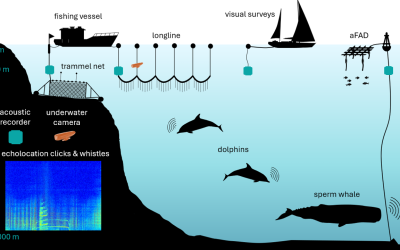
Multi-Platform Deployments of Low-Cost Devices for Cetacean Passive Acoustic Monitoring
Sep 6, 2026 | Articles, IOS4DOM
Cetaceans range over large areas and spend most of their time underwater, making their occurrence difficult to monitor.
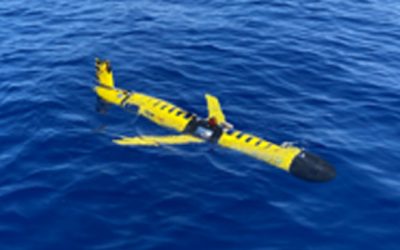
CESCAB: ocean glider for passive acoustic monitoring in Cabrera Archipelago National Park
Large marine protected areas are increasingly being implemented across the world’s oceans to conserve marine ecosystems.
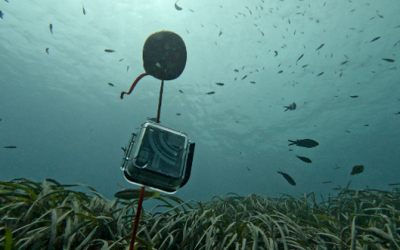
IOS4DOM Scientific Workshop: Bringing Marine Monitoring Technologies Together in Calpe
In June 2024, the Spatial Marine Lab team gathered in Calpe, Spain, for the first IOS4DOM Scientific Workshop.
Related RESOURCES
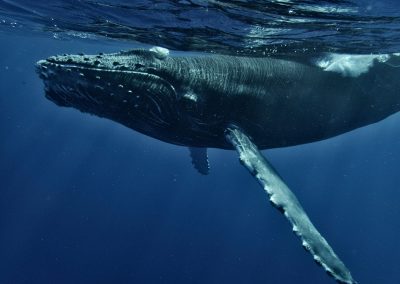


IOS4DOM
Infographic, IOS4DOM, RESOURCES
Infographic of the IOS4DOM Project. Integrated observing systems for dynamic ocean management.
MORESPATIAL MARINE LAB


CONTACT US
Unitat de Zoologia Marina
Parc Científic de la Universitat de València
Calle Catedrático José Beltrán 2,
46980 Paterna (València), Spain


